Avem nevoie de ajutorul dumneavoastră pentru a testa traducerea!
Dacă observați erori de traducere, vă rugăm să ne scrieți pe forum despre acestea.

Method of Sociometric Measurements

Contents

Description of the Method

The method of sociometric measurements or Sociometry is used to diagnose interpersonal and intergroup relations for the purpose of changing, improving, and perfecting them. Sociometry can be used to study the typology of social behavior in group settings and to assess the socio-psychological compatibility of members of specific groups. The founder of sociometry was the renowned American psychiatrist and social psychologist Jacob Moreno.

The method of sociometric measurements allows us to obtain information about:

  • socio-psychological relationships within a group;
  • the status of people in the group;
  • psychological compatibility and cohesion within the group.

In general, the goal of sociometry is to study the informal structural aspect of a social group and the psychological atmosphere that prevails within it.

Theoretical Foundations

The term "Sociometry" arose at the end of the 19th century in connection with the description of possible ways of measuring the social influence of some groups of people on others. The theoretical and ideological justification of sociometry as a method of cognition and measurement of social phenomena was given by J. (J.) L. Moreno. Firstly, sociometry is a general theory of social groups; secondly, sociometry means any measurement of all social relations; Thirdly, sociometry is the mathematical study of the psychological properties of a population, the experimental techniques and results obtained using quantitative and qualitative methods. The object of sociometric theory is real-life small social groups with sufficient experience of group life. The subject area of ​​sociometry is the emotional relationships of people within groups (sympathy, hostility, indifference). Based on the views of Karl Marx, Auguste Comte, and Sigmund Freud, sociometry is opposed to both behaviorism, which observes only the external behavior of people, and Freudianism, with its emphasis on the internal, deep processes of human behavior. According to Moreno, the emotional relationships of people in groups represent the atomistic structure of society, which is inaccessible to simple observation and can only be revealed through social microscopy. "Microsociology," Moreno wrote, "actually arose with the advent of my theory of 'social microscopy.' Combined with sociometric techniques, it laid the theoretical and practical foundations of microsociology." Moreno viewed the study of the "primary atomistic structures of human relationships" as "preliminary and necessary foundational work for most macrosociological research." One of the central concepts of this theory is the tele—a term denoting the simplest unit of feeling transmitted from one individual to another, determining the number and success of the interpersonal relationships they enter into.

The essence of the "general theory of sociometry" is the assertion that social systems are attractive-repulsive-neutral systems, including not only objective, externally manifested relationships (macrostructure), but also subjective, emotional relationships, often externally invisible (microstructure). The goal of sociometric theory is to formulate the laws of emotional relationships in groups.

The Main Provisions of Moreno's Theory

  • The social atom of society is not the individual, but their coexistence;
  • The Law of Social Gravity: Group cohesion is directly proportional to the attraction of its members to one another;
  • The Sociological Law: Higher forms of collective organization develop from simpler forms;
  • The Sociodynamic Law: Within some groups, human attachments are distributed unevenly.

History of Creation

Applied sociometry in the form of specialized survey and data processing techniques (sociometric tests, sociomatrices, sociograms, sociometric indices) was developed in research on resolving various conflicts in small groups. It has found wide application among sociologists and social psychologists in many countries. Modern sociological and social-psychological studies of small groups and primary (contact) groups almost always include sociometry as a primary or additional method.

Conducting Procedure

The general procedure for conducting a sociometric study consists of the following steps:

Stage 1

Definition Goals, objectives, and research hypotheses. Selection of research objects.

Stage 2

Development of sociometric criteria.

Sociometric criteria are formulated in the form of questions, the answers to which serve as the basis for establishing relationships within the group. Types of criteria:

  • formal/informal - Formal criteria are aimed at studying relationships in the group's primary activity. Informal - study informal relationships.
  • Dual/Single - Dual - study partnerships. Single - study leadership-subordinate relationships.
  • Predictive - measure how accurately the picture of relationships is reflected in the individual's consciousness.
  • Strong (or significant)/Weak (insignificant) - Strong reveals the deepest, most stable relationships, while weak (insignificant) touches on superficial relationships.

Criteria Requirements

  1. Limited number (3-4);
  2. Logical connection between them;
  3. Criteria should be interesting;
  4. The meaning of the criteria should be clear to the subjects;
  5. Criteria should be formulated as specifically as possible, preferably based on a real-life situation.

Stage 3

Selecting the type of sociometric research procedure.

Sociometry can be conducted in two ways:

Nonparametric Procedure

When using a nonparametric procedure, subjects are asked to answer questions without limiting the number of choices, i.e., all questions except themselves. Thus, using any of the proposed criteria, (N-1) people can be selected—the fundamental constant of sociometry, where N is the number of people in the group.

For a nonparametric procedure, the constant is the same for both the person making the choice and the person receiving the choice.

Advantages of a nonparametric procedure:

  • Allows for the identification of the emotional expansiveness of each group member;
  • Using this type of procedure, a cross-section of the entire diversity of relationships in the group structure is obtained.

Disadvantages of a nonparametric procedure:

  • When manually processing sociometric results, measurements are only possible in small groups (up to 12 people);
  • There is a high probability of random selection due to the amorphous system of relationships between the person choosing and others, or due to false answers intended to demonstrate normal loyalty to others and the experimenter.

Parametric Procedure

This procedure was developed to reduce the probability of random selection. The essence of the procedure consists of limiting the number of choices made by each participant (usually, for groups of 22-25 participants, the minimum "sociometric constraint" should be set at 4-5 choices). The limit value, d, is called the sociometric limit or the election limit. By introducing this value, we can standardize the external conditions of elections in groups of varying sizes. To do this, we must determine d using the same random selection probability for all groups. A formula for determining this probability was proposed by J. Moreno and E. Jennings:

2019-11-05_20-11-48.png

where P(A) is the probability of a random sociometric selection event, usually chosen within the range [0.2-0.3];

N is the number of group members.

Advantages of the parametric procedure:

  • Increases the reliability of the obtained data;
  • Facilitates statistical processing;
  • Allows for standardization of selection conditions in groups of varying sizes;
  • As a result, it becomes possible to compare relationships in different groups.

Disadvantages of the nonparametric procedure:

  • Does not reveal the full diversity of relationships within the group;
  • The sociometric structure of the group as a result of this approach will reflect only the most typical, "selected" communications. The introduction of a "sociometric constraint" does not allow one to judge the emotional expansiveness of group members.

Stage 4

Development of a sociometric card or sociometric questionnaire.

When conducting sociometry, two options are possible:

  • Option I - The sociometric study is part of a general survey. In this case, sociometric criteria can be included in the overall system as a separate section. However, it is important to keep in mind that subjects must sign their questionnaires, and when selecting people, write their last names.
  • Option II - Sociometry is a subject of independent study. The order of compiling the card might then be as follows:
    • Lists of group members are prepared;
    • Each person in the group is listed under a specific number – this number becomes their code.

Then the card itself is prepared. It should contain the following elements:

  • Title;
  • Instructions – the number of required choices and the method for completing the choice column;
  • Signing the card (legibly).

In it, each group member must indicate their relationship with other group members according to the selected criteria (e.g., in terms of teamwork, participation in solving a business problem, spending leisure time, playing a game, etc.). The criteria are determined depending on the program of the given study: whether relationships are being studied in a production group, a leisure group, a temporary or stable group.

Example of a sociometric card

In the card, each group member must indicate their attitude towards other group members according to the selected criteria (for example, in terms of joint work, participation in solving a business problem, spending leisure time, playing a game, etc.) The criteria are determined depending on the program of the given study: whether the relationships are being studied in a production group, a leisure group, in a temporary or stable group.

Sociometric Card
Type Criteria Elections
1. Work a) Who would you like to choose as your foreman?

b) Who would you not like to choose as your foreman?


2. Leisure a) Who would you like to invite to your New Year's Eve party?

b) Who wouldn't you like to invite to your New Year's Eve party?


For a survey without choice restrictions, a column should be drawn on the sociometric card after each criterion, the size of which would allow for sufficiently complete responses. For a survey with choice restrictions, the number of vertical columns to the right of each criterion on the card equals the number of choices we intend to allow in a given group. The number of choices for groups of different sizes, but with a predetermined P(A) value in the range of 0.14–0.25, can be determined using a special table:

Limitation values ​​of sociometric choices

Number of group members Sociometric

constraint d

Probability

of random selection P(A)

5–7

8–11

12–16

17–21

22–26

27–31

32–36

1

2

3

4

5

6

7

0.20–0.14

0.25–0.18

0.25–0.19

0.23–0.19

0.22–0.19

0.22–0.19

0.21–0.19

Stage 5

The actual sociometry. It consists of two main components: instructions and substantive questions. Most often, the psychologist gives verbal instructions to all group members and reads out the questions, asking them to write their answers on special forms (with space for their names, question numbers, and numbers from 1 to 5 in a column under each question) or simply on a piece of paper. Alternatively, the psychologist gives verbal instructions and then distributes sociometric cards, which contain brief written instructions, space for names, all the questions, and space for answers under each. The advantage of the second option is that respondents have the instructions in front of them at all times, which (slightly) reduces the number of follow-up questions.

In both cases, verbal instructions serve two very important functions: motivating participants and providing technical explanations.

The motivational component is fundamentally important; it largely determines the openness of survey participants and their willingness to respond. The sociometric procedure itself is a rather serious emotional test, especially for those occupying extreme status positions: high-status and unpopular. You must honestly write about who you like and who you dislike, knowing that at this moment, everyone else is evaluating you too. Moreover, you must sign your statements.

It is possible and necessary to reduce the overall tension of the situation. From this perspective, the following points are important.

  • Trusting contact with the group is essential.
  • The style of instruction delivery: friendly, informal, calm.
  • Softly formulate the testing goals.

The following points should be emphasized in the technical part of the instructions:

  • Each person fills out their own sheet independently, without consulting anyone or thinking aloud about their choices;
  • When filling out the sheet, it is necessary to consider all group members, not just those currently present (to make it easier, you can write the full list of the group on the board or give it to participants);
  • When answering, it is strongly recommended to avoid options such as "all," "any," or "none"; it is preferable to limit all questions to the number of choices suggested by the psychologist.

Instruction Options

Instructions for Schoolchildren "We have discussed issues concerning relationships in your class many times, trying to figure out whether it is friendly or not, and if not, then why. To make our future work interesting and useful, it is important for me to understand what your class is like. To do this, I want to use a technique with the clever name of "sociometry." It consists of five questions. You will now receive the test forms and read them. The questions are both simple and complex. They relate to your class, the relationships between the students, and each of you personally. To ensure your work is not in vain, it is crucial to take it seriously and be as sincere as possible in your answers. Of course, you can choose not to answer the questions, but doing so will make it difficult to further develop positive, friendly relationships in the class. One more thing: you must sign the forms. When you read the questions, you will understand that without a signature, they are meaningless. Of course, I can mark the sheets I hand out to you or conduct a graphological analysis, but these are unseemly methods.

For my part, I guarantee that your answer sheets will not fall into the hands of anyone: not your classmates, not your teachers, not your parents. Only I will see them. At the general class meeting and the teachers' consultation, we will discuss only general information. If you'd like my opinion on your personal answers, come see me and we'll talk calmly.

Now take your sheets, read each question, and answer immediately. Consulting, discussing aloud, or looking at your neighbor's sheet is impolite: this isn't an algebra test, but each of you's personal opinion, which, by the way, you're not obligated to share with your classmates.

So, sign the sheet and start answering. You'll have about ten minutes to complete everything. If you finish first, give me your sheet and leave the classroom immediately."

Instructions for Students "Dear students, Your group was created recently. Your wishes could not be taken into account when it was formed, as you weren't well acquainted with each other. Since then, the group has come together. You've gotten to know each other better, and some of you have become friends, but there's likely been some friction. We'd like to draw on your experience to restructure future study groups based on your wishes. To this end, you'll be asked a series of questions, which you must answer truthfully. The composition of the newly formed groups will depend on the sincerity of your answers. We ask that you answer independently, without consulting one another. Your answers will not be made public."

Stage 6

Direct processing and interpretation of results

Processing results

When Once the sociometric cards are completed and collected, the mathematical processing stage begins. The simplest methods of quantitative processing are tabular (sociometric matrix), graphical (sociogram), and indexological (sociometric indices).

Sociometric Matrix

A sociomatrix is ​​a matrix of relationships used to analyze intra-group relationships. The sociomatrix contains information obtained during a survey in the form of numerical values ​​and symbols.

Analyzing the sociomatrix for each criterion provides a fairly clear picture of relationships within a group. Summary sociomatrixes can be constructed, providing a picture of elections by several criteria, as well as sociomatrixes based on intergroup elections.

The main advantage of the sociomatrix is ​​the ability to represent elections numerically, which in turn allows for ranking the order of influences within a group. Based on the sociomatrix, a sociogram—a map of sociometric elections (sociometric map)—is constructed, and sociometric indices are calculated.


Sociogram

A sociogram is a schematic representation of subjects' reactions to each other when answering a sociometric criterion. A sociogram allows for a comparative analysis of the structure of relationships within a group in space on a certain plane ("shield") using special symbols.

There are two types of sociograms:

  • Group sociograms
  • Individual sociograms

The former depict a picture of relationships within the group as a whole, while the latter depict the system of relationships existing between the individual of interest and the rest of the group.

Group sociograms, in turn, can be represented as:

  • Conventional sociograms - individuals making up the group are depicted as circles connected by arrows symbolizing sociometric choices or deviations.
  • "Target sociograms" - a system of concentric circles, the number of which is equal to the maximum number of choices received in the group. All group members are arranged on the circles according to the number of choices received. The entire target sociogram is divided into sectors based on the group's socio-demographic characteristics (gender, age, etc.).

Individual sociograms are used to more clearly represent the position of individuals within a group, depicting the individual in the totality of all their connections with other group members.


Sociometric indices

There are two types of sociometric indices:

  • personal sociometric indices;
  • group sociometric indices.

The former characterize the individual socio-psychological properties of an individual as a member of a group. The latter provide numerical characteristics of the overall sociometric configuration of group choices. They describe the properties of group communication structures.

The main personal sociometric indices are:

  • sociometric status index of the i-th member;
  • emotional expansiveness index of the j-th member;
  • index of the volume, intensity, and concentration of interaction of the ij-th member.

The symbols i and j denote the same group member, but in different roles:

  • i – object of choice;
  • j – subject of choice;
  • ij – combination of roles.

Among the group sociometric indices, the most important are:

  • index of emotional expansiveness of the group;
  • index of psychological reciprocity in the group (group cohesion);

More about sociometric indices

Interpretation of Results

Sociometric data is interpreted by analyzing the data obtained during processing: sociomatrix, sociograms, and sociometric indices.

A comprehensive analysis of an individual's status in a group can also be obtained using six indices that assess the number of: 1) choices made; 2) choices received; 3) mutual choices; 4) received rejections; 5) made rejections; 6) mutual rejections.

By assigning each indicator a "+" (if it is above the group average) or a "-" (if it is below the group average), one can obtain a coded sociometric profile of the individual. For example, a profile of the form "+, +, +, –, +, –" would indicate that this individual rejects many in the group, but this circumstance does not affect their popularity.

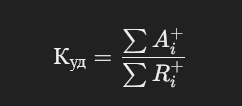
For each group member, it's not so much the number of elections that matters, but the Satisfaction Coefficient (Scu) with their position in the group:

2025-01-20_14-36-33.png
Kud = (total number of positive choices that this member i received from other group members) / (total number of positive choices that this member i made in relation to other group members).

Thus, if an individual wants to communicate with three specific people, and none of these three wants to communicate with this person, then Kud = 0 / 3 = 0.

If the participant has not made a single choice, then Kud is considered undefined. In this case, the coefficient can be conventionally taken as 0, interpreting this as a complete lack of activity.

The satisfaction coefficient can be 0, while the status (number of choices received) is, for example, 3 for the same person – this situation indicates that the person is not interacting with the people they would like.

Interpretation of the satisfaction coefficient:

  • K > 1: The participant receives more positive choices than they make. This indicates satisfaction with their position in the group.
  • K ≈ 1: The participant receives approximately the same number of choices as they make. This indicates a balance between expectations and perceptions.
  • K < 1: The participant receives fewer positive choices than they make. This may indicate dissatisfaction with one's position in the group.

As a result of the sociometric experiment, the leader receives information not only about the personal position of each group member in the system of interpersonal relationships, but also a general picture of the state of this system. This is characterized by a special diagnostic indicator – the level of relationship well-being (LWR). A group's LWR can be high if the sum of "stars" and "preferred" members exceeds the number of "neglected" and "isolated" group members. An average level of group well-being is determined when the ratio of "stars" + "preferred" = "neglected" + "isolated" + "rejected" is approximately equal. A low LWR is observed when low-status individuals predominate in the group. An important diagnostic indicator is the "isolation index" – the percentage of people deprived of choices in the group.

Stimulus material

Options of Sociometric Criteria (Questions)

Literature

  1. Moreno D.L. Sociometry. Moscow, 1958.
  2. Moreno, Ya. L. Sociometry: Experimental Method and Science of Society / Translated from English by A. Bokovikov. — M.: Academic Project, 2001.
  3. Volkov, I.P. Sociometric Methods in Social-Psychological Research. Leningrad, 1970.
  4. Fundamentals of Psychology: Workshop / Ed. and compiled by L.D. Stolyarenko. - Rostov n / D: "Phoenix", 2001.
  5. R.A. Zolotovitsky. Sociometry of Ya.L. Moreno: A Measure of Communication // Sociological Research. 2002. No. 4. pp. 103-113.


Vezi și:

Am fost procesați
mai mult 228 271 sociometrie!
Sociomatrix.Online în Telegram:
Telegram


Pentru utilizatorii recunoscători Dacă doriți să ajutați proiectul sau să vă mulțumiți, puteți contacta autorul proiectului și să transferați orice sumă.
Unde vor merge banii?